Kimberly Terrell, Ph.D. Research Scientist, Environmental Integrity Project
What would higher education look like if universities started proactively dismantling academic freedom, without waiting for a federal mandate?
At a time when colleges and universities across the nation are struggling to defend themselves from political interference, Louisiana is taking a preemptive approach. This past summer, two Louisiana scientists found themselves stonewalled by their university leadership. The circumstances differed – one was a research scientist at an environmental law clinic in a private law school, and the other a chemist in Louisiana’s public university system. But they both committed a common, cardinal sin: publishing peer-reviewed science that exposed the harms of Louisiana’s powerful petrochemical industry.
This is partly my story – I was the research scientist at Tulane Environmental Law Clinic. It all started with a study I published in Ecological Economics, which found that people of Color don’t get their fair share of jobs in the U.S. petrochemical industry, despite bearing the brunt of industrial pollution. The bigger surprise was that this employment disparity was not explained by the (comparatively smaller) racial education gap – debunking a common narrative.
I recently heard a math professor from Columbia University claim, in a public interview, that “math is a wonderfully apolitical topic.” Perhaps. But be advised, if your fractions reveal a racial disparity in petrochemical jobs, things can get political real quick.
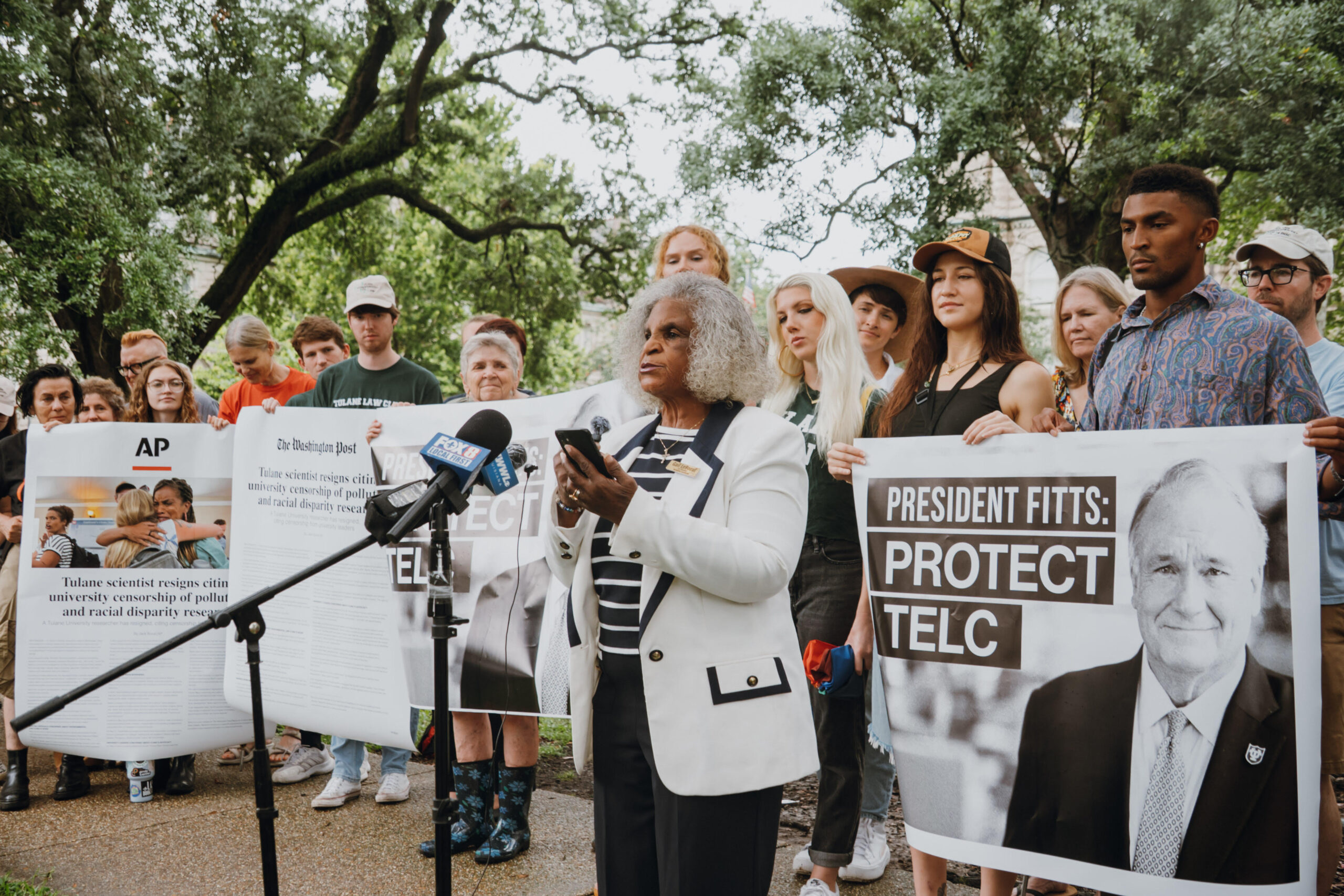
My jobs study hit the media on the day Tulane President Michael Fitts went to the state capitol to lobby for funding. As the Provost later told me, the visit was going well until someone suddenly accused Tulane of being anti chemical industry because of that study. I was told that Governor Landry met privately with President Fitts and threatened to veto any funding for Tulane unless something was done about the Tulane Environmental Law Clinic. Our clinic has a long history of providing free legal services to communities seeking a voice in environmental decision-making. In Louisiana, this means taking on the formidable and politically protected petrochemical industry.
The week after Fitts’ visit to the state Capitol, I was placed under a gag order. Henceforth, all my communications were to be pre-approved by the law school Dean. Predictably, she approved almost nothing. I was prevented from attending conferences, speaking to journalists, and building new research partnerships. When I invoked the sacrosanct principle of academic freedom, the Dean informed me that “staff scientists do not have academic freedom.” When I cited the relevant provisions of the faculty handbook, the Provost dismissed that language as non-binding. He then suggested that the handbook would be revised and my job description rewritten, presumably to solidify Tulane’s stranglehold on inconvenient science.
After six weeks of fighting the gag order, it was clear that Tulane was unrelenting. So I made a final stand in defense of academic freedom and publicly resigned.
I wish the story ended there. But it doesn’t. The following month, local media reported that Southeastern Louisiana University abruptly removed Dr. Fereshteh Emami from her research position after she published a peer-reviewed article exposing heavy metal contamination in Louisiana waterways from industrial operations. Without explanation, the university shut down Dr. Emami’s lab and increased her teaching load, preventing her from continuing this research. All because she published concentrations of contaminants in waterways.
Fractions can get you gagged, and concentrations can close your lab. So much for a “wonderfully apolitical” topic.
It’s tempting to dismiss Louisiana as a unique, extreme example in the war on higher education. But we know better. Louisiana is a warning sign – an omen of what’s to come if we choose to participate in a system that incentivizes creative strategies for suppressing academic freedom. We must draw a line in the sand, and sometimes that means accepting professional setbacks in defense of the greater good.